
More Than a Self-Portrait: Exploring Identity in the Studio
Who am I? What makes me who I am? How do I see myself? How are the people, places, interests, and experiences I love connected to my identity?
These are some of the ideas beginning to emerge in the Studio as I continue working with the Loggerheads and Sea Stars to explore identity, representation, and the many ways we see and express ourselves.
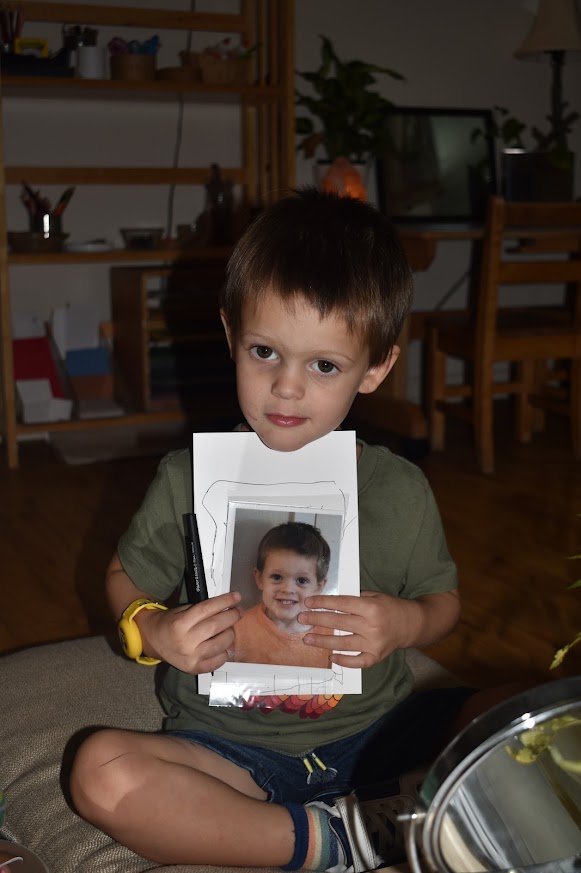
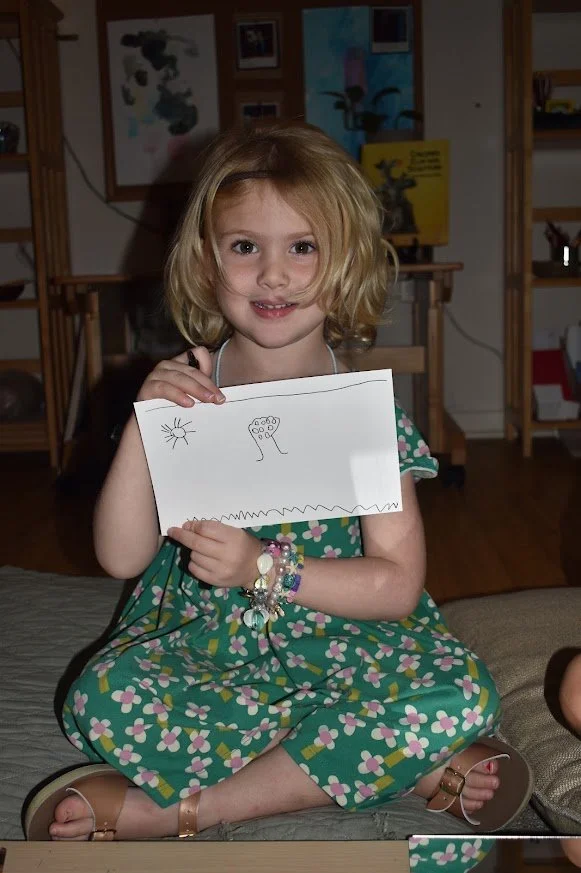
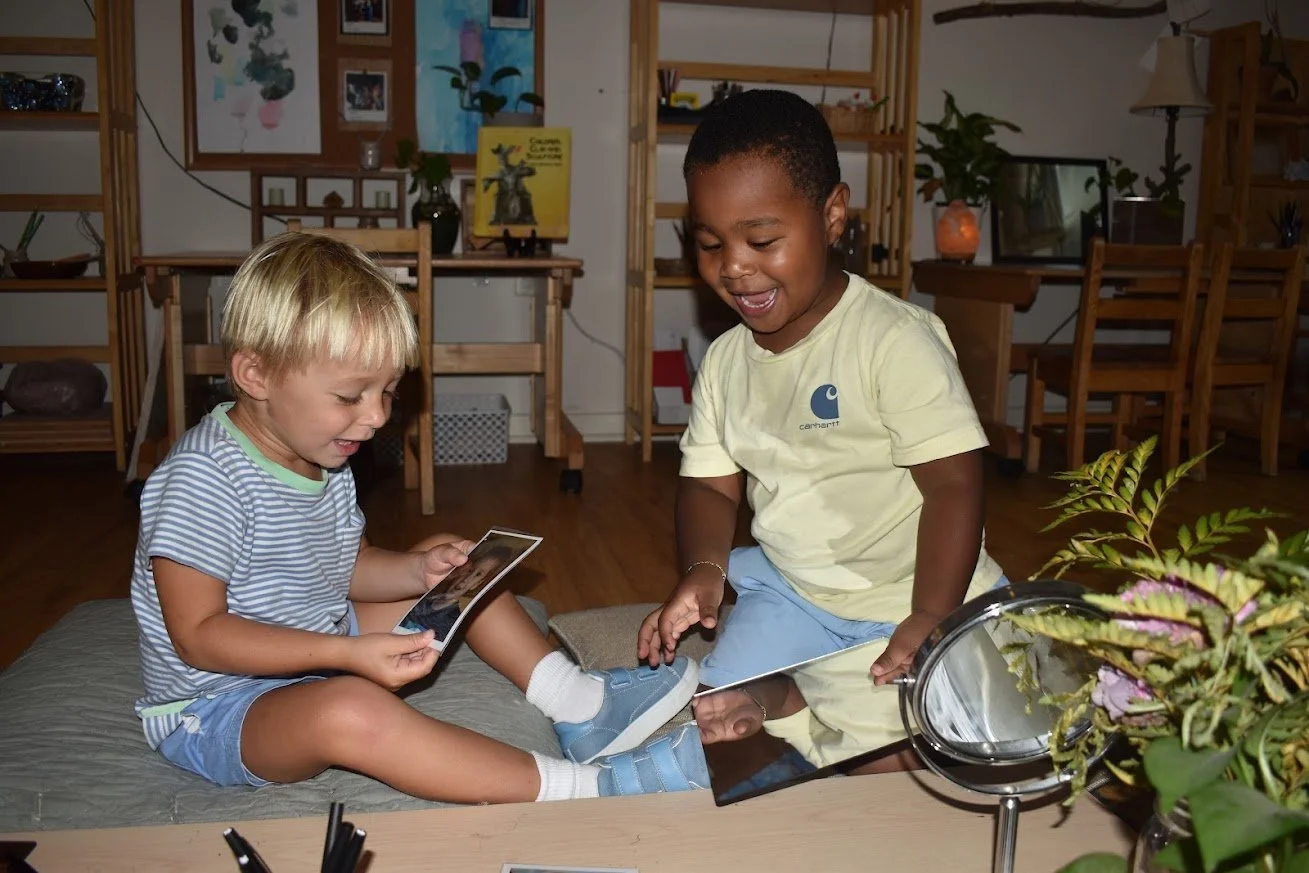
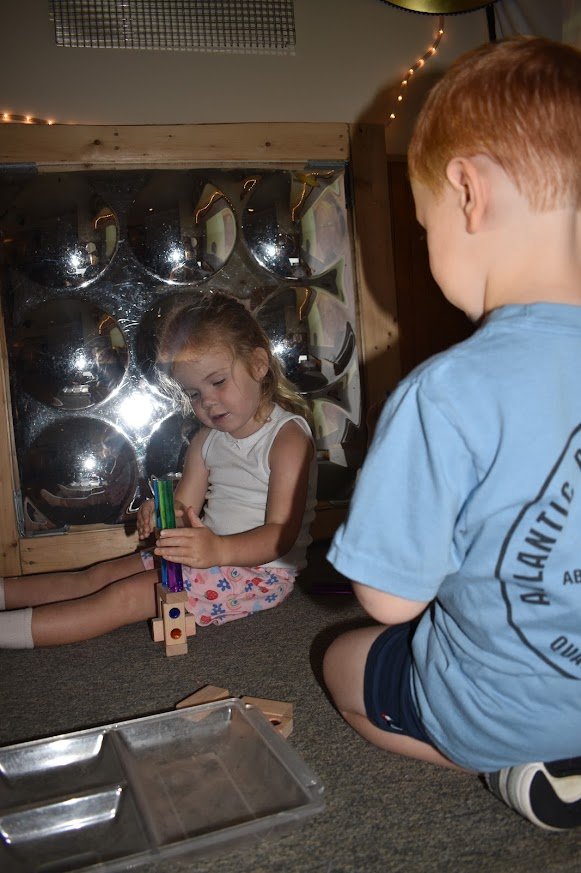
When I began this research, I invited the children into the Studio in small groups where they encountered photographs of themselves and their classmates, mirrors, drawing materials, light, shadow, and opportunities to make marks and create representations.
Rather than asking the children directly to “draw yourself,” I wanted to leave the invitation open and give their own ideas room to emerge.
And emerge they did!
Some children were immediately drawn to photographs of themselves. Others excitedly recognized their classmates, calling out things like, “That’s my friend!” Some began creating pictures for their friends or family members. Others represented things that were important to them, including apple trees, flowers, football, clothing, favorite objects, and familiar experiences. Some of our conversations even began moving toward who the children imagine they might become when they are older.
At first, these ideas seemed to be moving in many different directions. But as I listened more closely, documented their words, and looked back at their work, I began to see a common thread connecting them all.
Identity is about so much more than what we look like.
Our identities are connected to the people we love, the friendships we build, the things that interest us, the experiences we remember, the communities where we belong, and even the people we imagine ourselves becoming.
Revisiting Our Thinking
When the children returned to the Studio for another visit, I invited them to revisit the photographs and drawings from their first experience.
In Reggio Emilia inspired practice, revisiting gives children an opportunity to encounter their own thinking again. I do not have to view a child's drawing as a finished product. Instead, it can become something to reconsider, change, question, expand, or see in a completely new way.
Some children added new details, lines, and colors. Some traced or transformed earlier marks. Others decided to create an entirely new representation.
I found this part of the process especially interesting because their ideas had not necessarily remained the same between visits, and that was important.
It left me wondering:
What changes when children have another opportunity to encounter an earlier idea?
Do they see something they did not see before?
How does the way children represent themselves and the things important to them change over time?
How are our relationships part of who we are?
What do children choose to represent when they are given the freedom to decide what matters?
How many different ways can an idea, a person, or even ourselves be represented?
Introducing Another Language: Clay
As this research continues, I am excited to introduce a new material into the Studio: clay.
In the Reggio Emilia approach, children are understood to have “a hundred languages,” or many different ways of thinking, communicating, investigating, and making meaning.
Drawing is one language, but it is not the only one.
Clay offers something entirely different.
It can be pressed, rolled, pinched, joined, flattened, stacked, carved, balanced, changed, taken apart, and rebuilt. An idea that exists as lines on paper may become something completely different when a child is able to give it dimension and form.
Before asking clay to represent an idea, however, I want to give the children time to simply meet the material.
I want them to discover what clay can do, what their hands can do with it, how it responds to pressure and movement, and what possibilities they notice through their own experimentation and through watching one another.
Eventually, I may bring their earlier photographs, drawings, words, and ideas back into conversation with this new material.
What happens when an idea first expressed through drawing is encountered again through clay?
Will the children represent themselves?
Will they create their friends or family?
Will they represent something they love?
Will they imagine themselves in the future?
Or will clay take their thinking somewhere I have not considered yet?
I do not know, and that is an important part of this work.
Following the Children
Rather than planning an end product for this investigation, I am allowing my observations and documentation of the children to help guide what I offer next.
Right now, the children are showing me that identity may live in many places.
In ourselves.
In our relationships.
In the people we love.
In the things that matter to us.
In the communities where we belong.
In our memories and experiences.
In the people we imagine ourselves becoming.
As the Studio Teacher, my role is to listen closely, make the children's thinking visible, offer materials and experiences that might deepen their ideas, and remain curious alongside them.
Our Studio research began with photographs, mirrors, drawing, light, and shadow. Now clay will offer another language through which the children can communicate their ideas.
I am excited to see where their thinking takes us next.
Because perhaps the question is not simply, “What do I look like?”
Perhaps the bigger question is, “Who am I, and how many ways can I show you?”
-Kelsey LaSance