
The Language of the Table
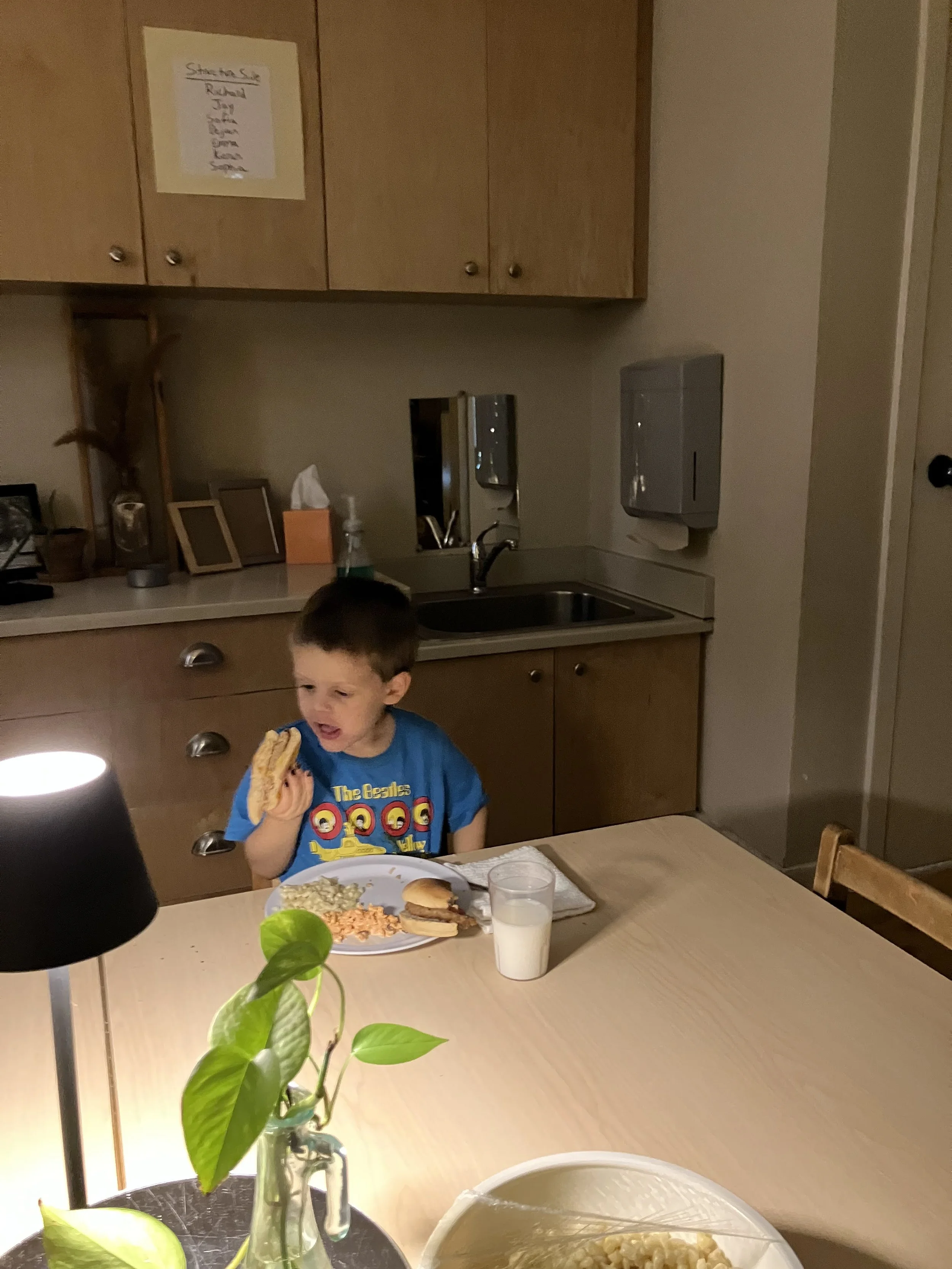
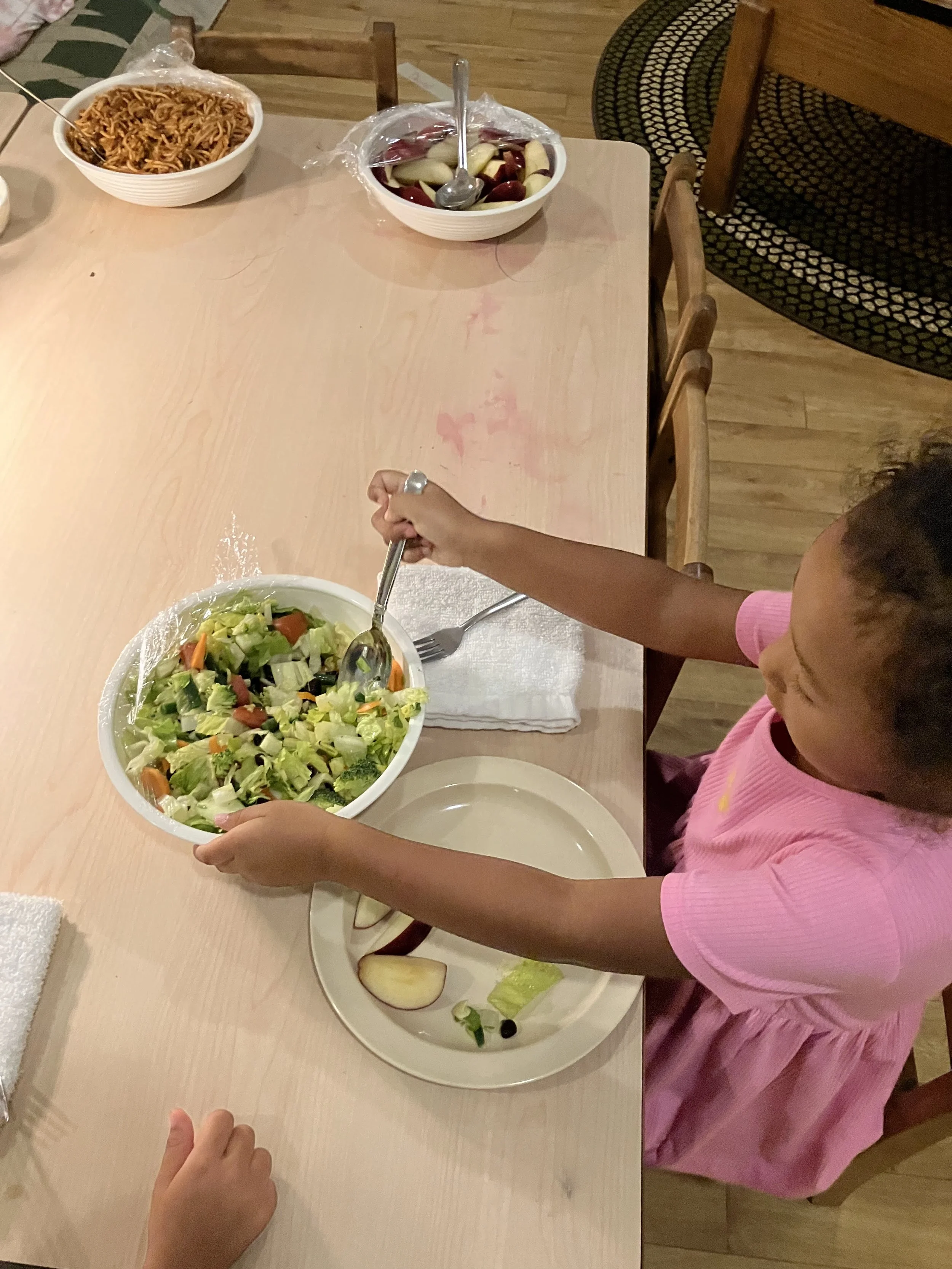
At the Day School, mealtimes are much more than a time to eat. They are a meaningful part of our day where children build relationships, practice independence, explore new foods, and experience what it means to be part of a community.
Each day, our children are served a warm lunch and two snacks. We follow a three week rotating menu with seasonal foods that change throughout the year. Some days bring familiar favorites, while others invite children to experience something new. Soup Day is always a favorite! Offering foods more than once gives children opportunities to become familiar with new tastes, textures, and smells at their own pace.
We are also grateful for the fresh fruits and vegetables our Day School families donate throughout the year. These donations are enjoyed alongside our regular morning and afternoon snacks and give children even more opportunities to experience fresh, seasonal foods. At times, some of the vegetables we enjoy even come from our own Day School garden, including cucumbers, peppers, tomatoes, and eggplant. Seeing food grow in our own environment and then finding it on our snack table creates a meaningful connection between caring for our garden, our food, and our community.
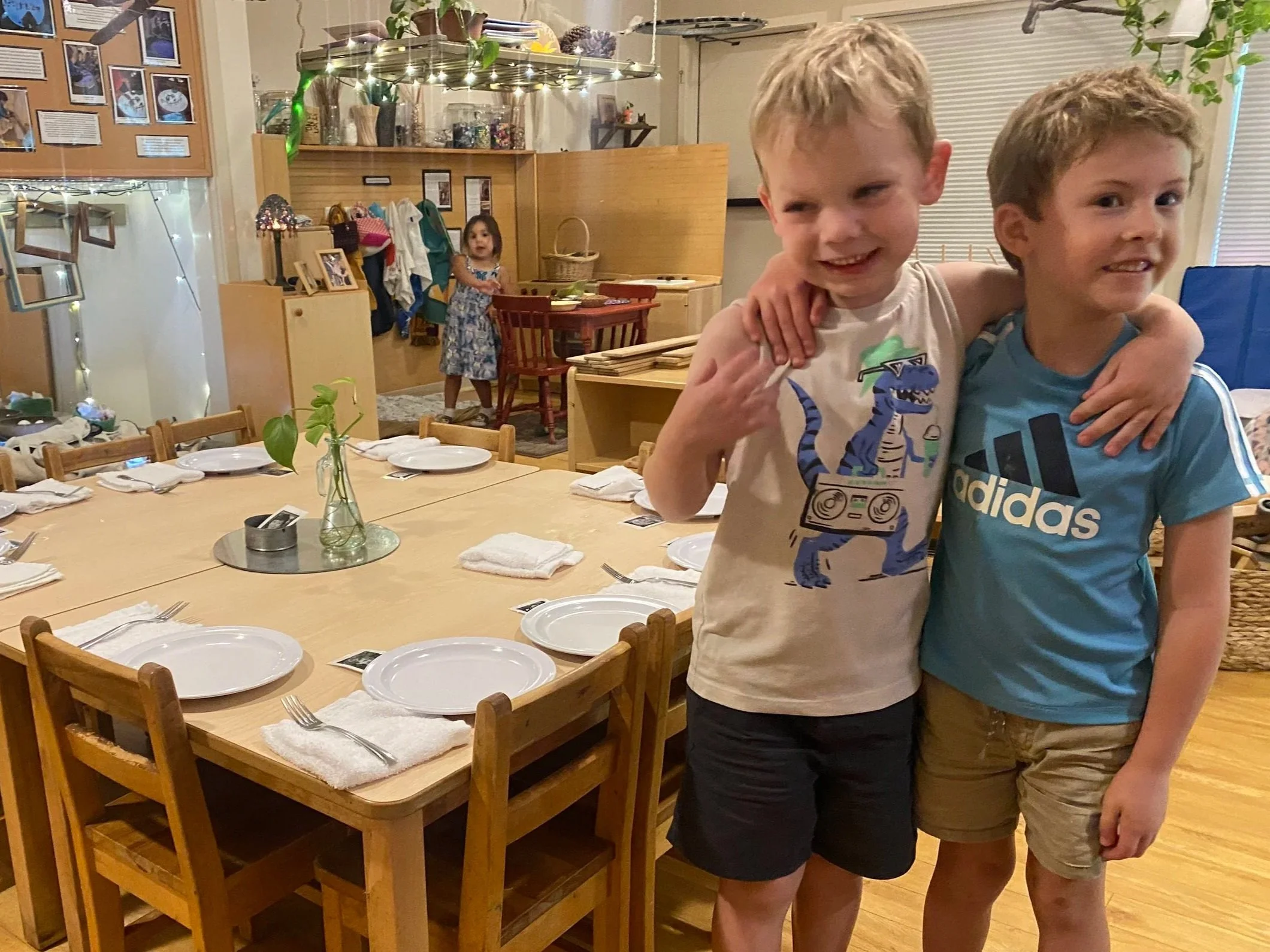
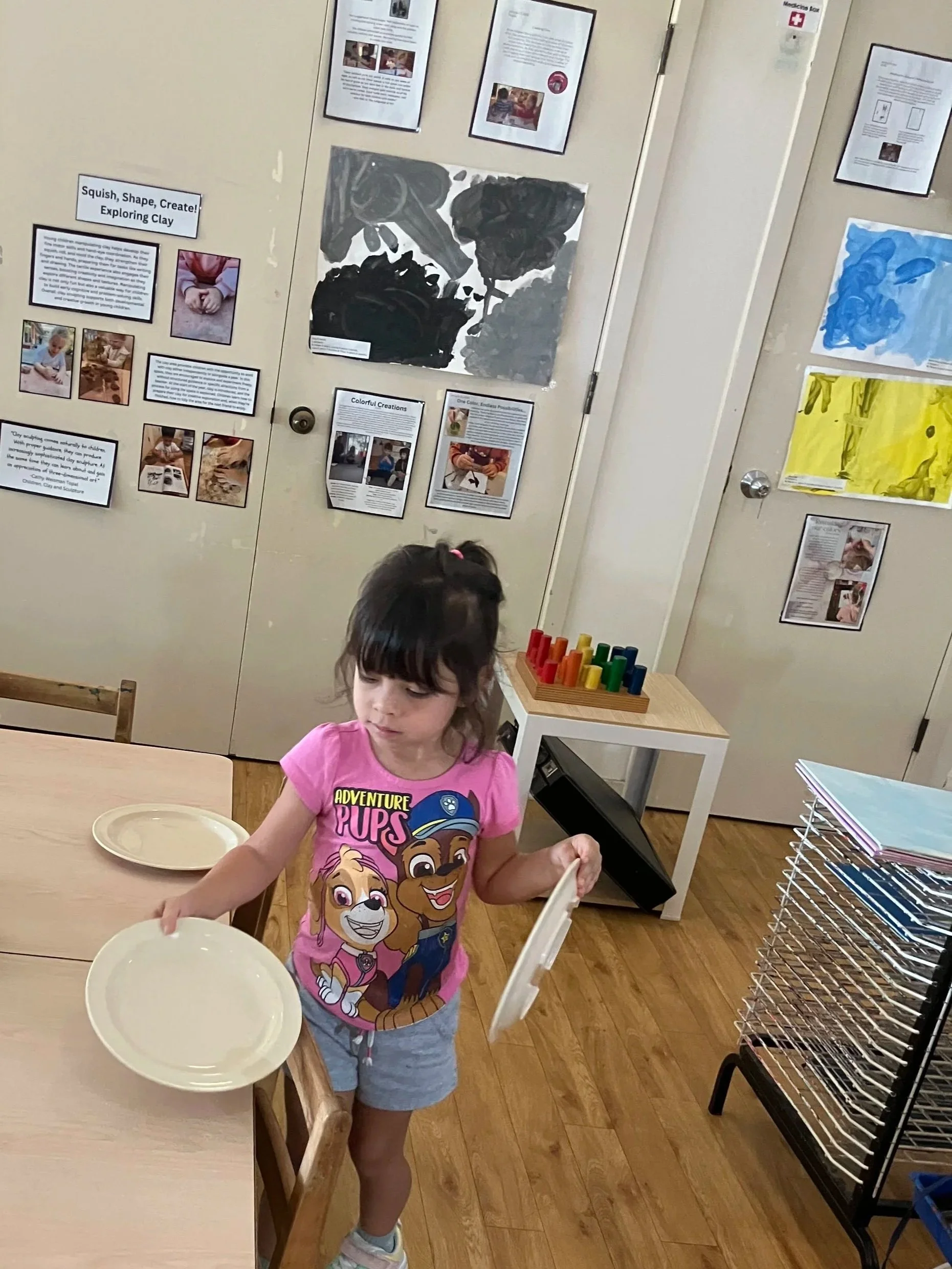
Before we eat, the children help prepare the environment. They set the tables using real dishes, cups, forks, and cloth napkins. What may look like a simple task is filled with opportunities for mathematical and literacy learning. Children count how many friends are joining them and determine how many place settings are needed. They match one plate to one chair, one napkin to one plate, and one fork to each setting. Each place setting also has a name card with the child's photo and name, creating a natural opportunity to recognize their own name and the names of their friends.
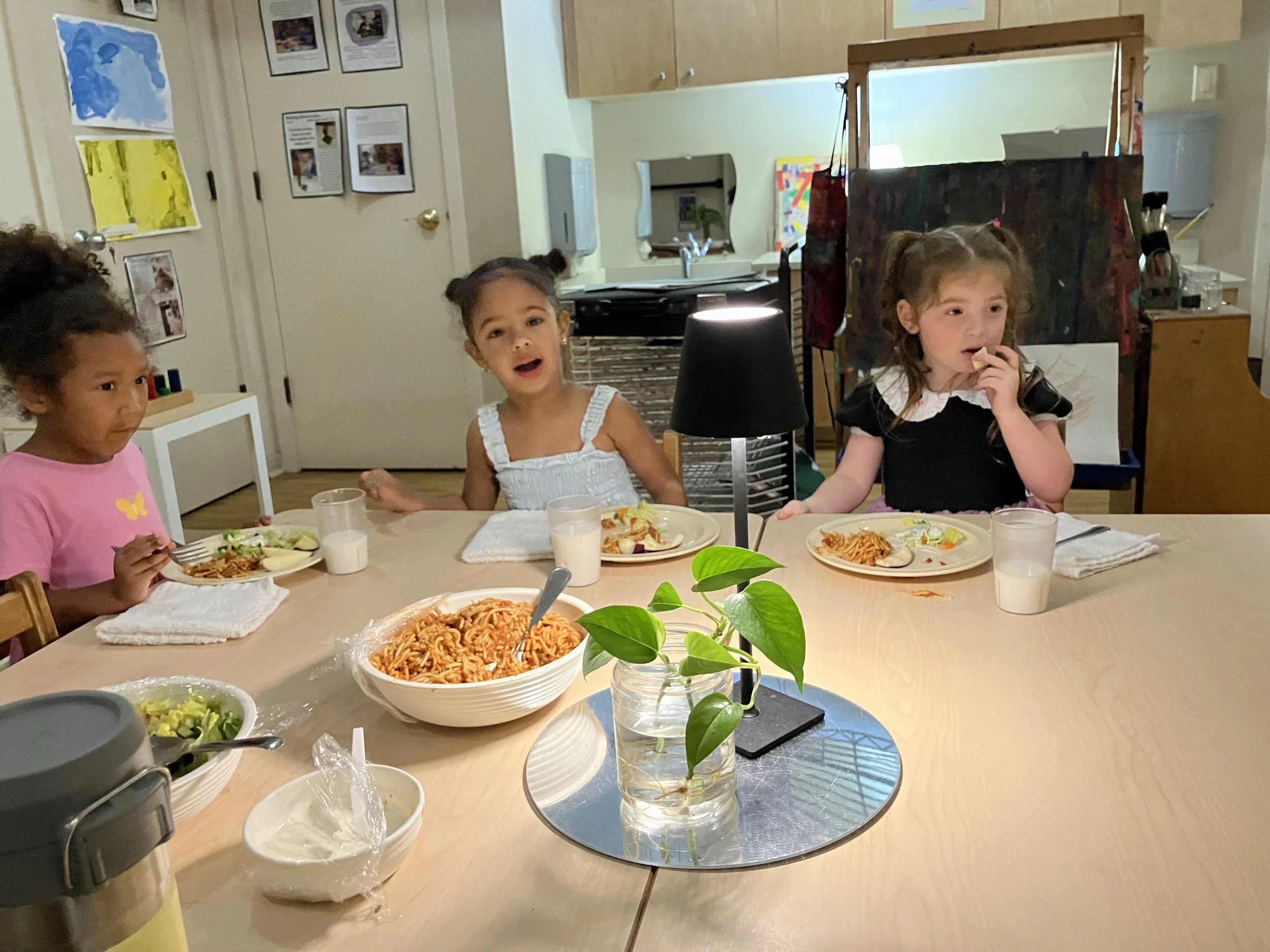
Once everyone is seated, the children serve themselves. Veggies, fruit, and the main dish are passed around the table, and children use spoons or tongs to choose how much they would like. Our older friends are also beginning to practice pouring their own milk from small pitchers. These everyday experiences encourage children to make choices, develop coordination and fine motor skills, and build confidence in their ability to care for themselves.
Perhaps one of the most meaningful parts of our family style meals is the opportunity to sit together.
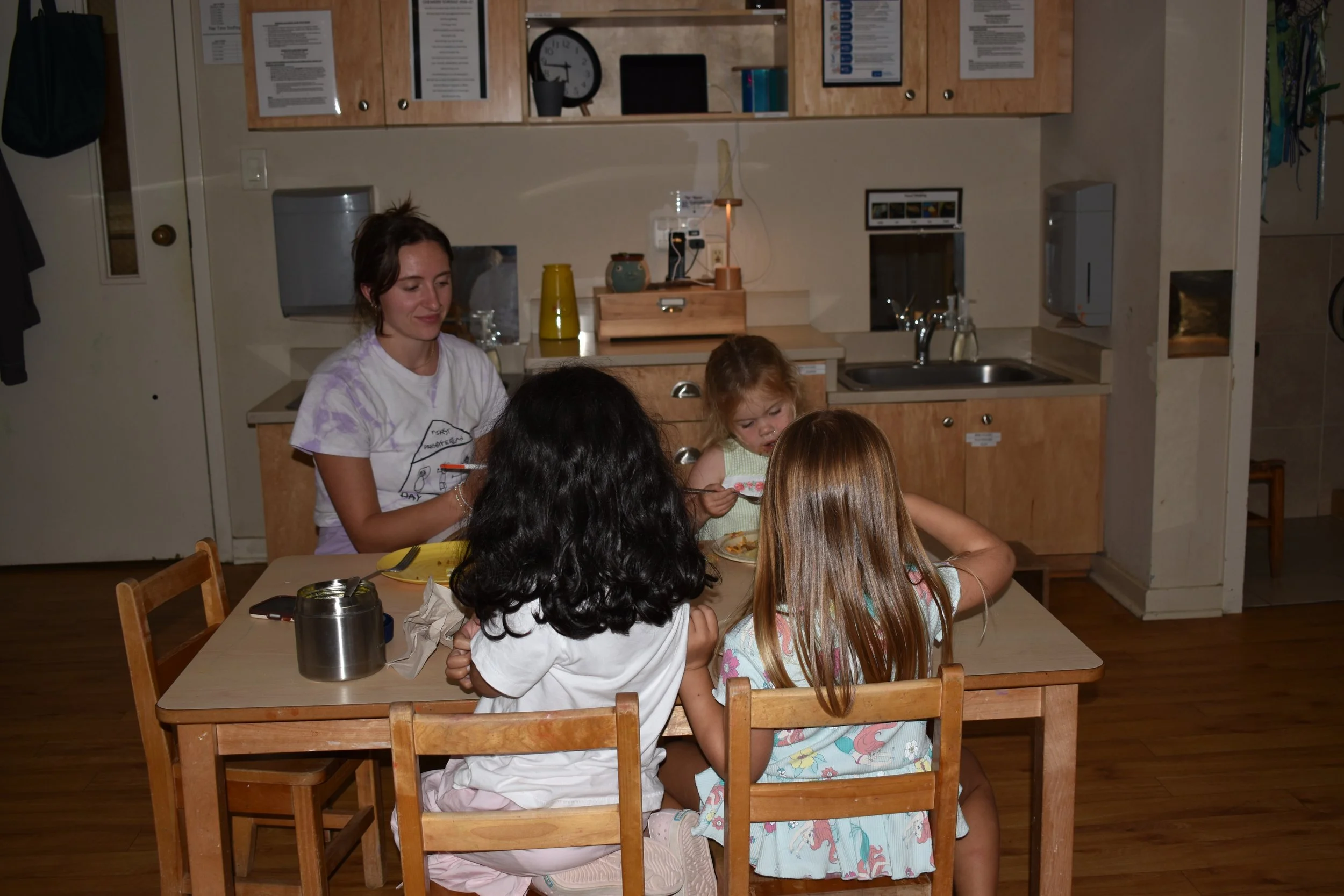
Teachers eat alongside the children, creating space for conversation and connection. Children share stories from home, talk about their favorite parts of the day, make weekend plans, and listen to one another. Their conversations often naturally connect back to the questions and research happening in their classrooms. Mealtime becomes a place where ideas are shared, relationships grow, and children learn from one another.
This is an important part of the Reggio Emilia approach. We see children as capable, competent, and full of ideas. Rather than doing everything for children, we create environments where they can participate in the real work of the community. Setting the table, serving food, pouring milk, caring for shared materials, and cleaning up are all opportunities for children to contribute and experience themselves as valued members of the group.
After lunch, the learning continues as children care for their own spaces. They scrape their leftover food into the trash, place their plate, fork, and cup on the tray, and put their cloth napkin into the laundry bin. If needed, they can get the small broom and sweep beneath the table or wipe their space clean before washing their hands.
These routines communicate something important to children: You belong here, and you have an important role to play.
Our family style meals are one of the many ways we create a sense of belonging at the Day School. Around the table, children practice academic skills, develop independence, learn to care for their environment, try new things, and most importantly, build relationships with the people around them.
Even something as ordinary as sharing a meal can become one of the many beautiful languages children use to learn, communicate, connect, and grow.